 Family-friendly recipes by a registered dietitian


New to TVP? This step-by-step guide covers everything I wish I’d known about how to cook TVP (textured vegetable protein) when I first started. From rehydrating, browning, and seasoning it to using it as a meat extender or meat substitute, you’ll find it all here, plus six easy flavor variations to try.
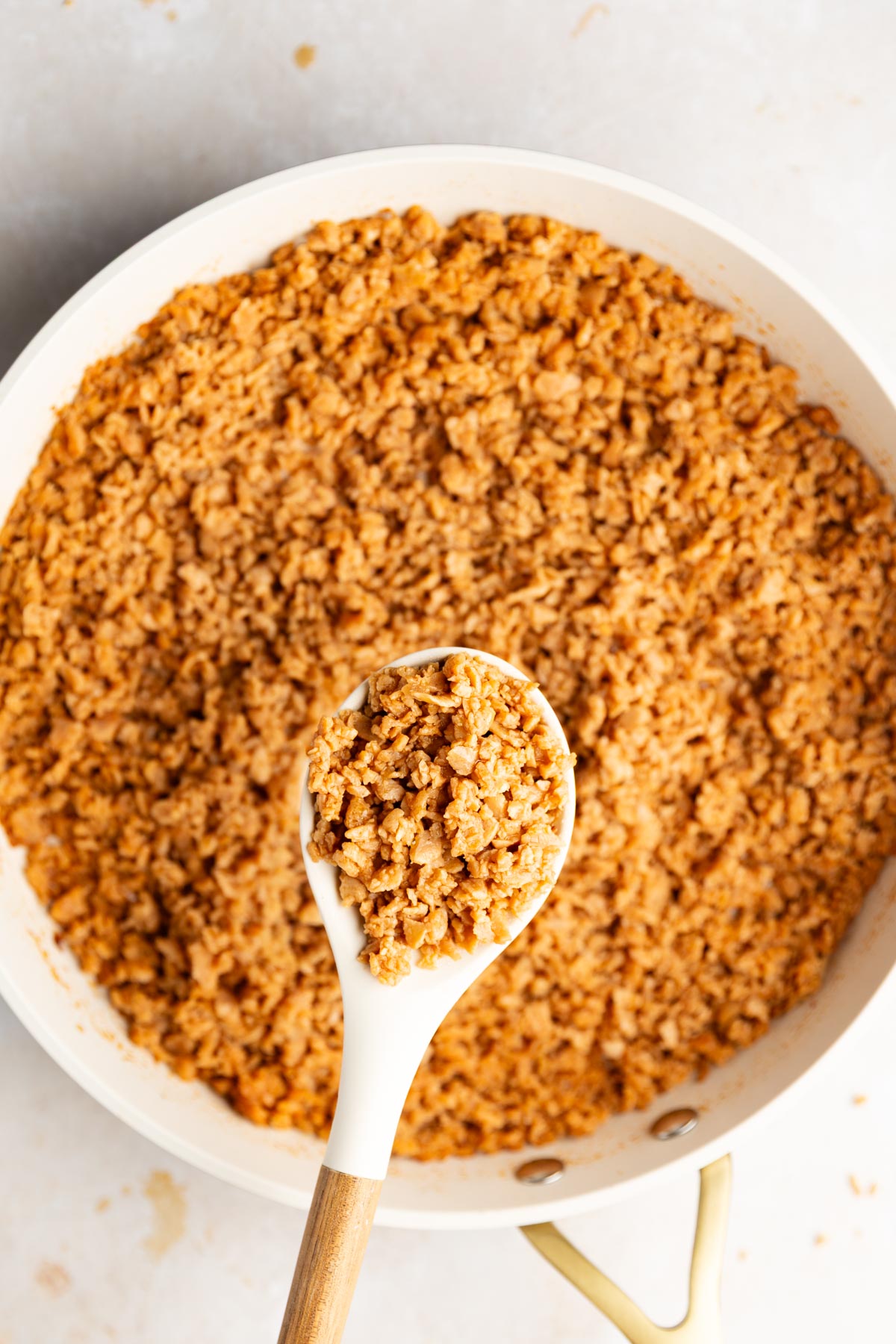
At first, TVP intimidated me. I wasn’t sure how best to rehydrate it, get the best flavor, or work it into our favorite recipes. Turns out, TVP is pretty forgiving, and after a few tries, I got the hang of cooking with it! Now, it’s one of my favorite meat alternatives and a regular part of our family’s meals.
If you’re new to cooking with TVP, this guide has all the important info (and photos!) you need to start incorporating it into more of your meals, too. This TVP taco meat and TVP chili are a couple of our family favorites!
What is textured vegetable protein (TVP)?
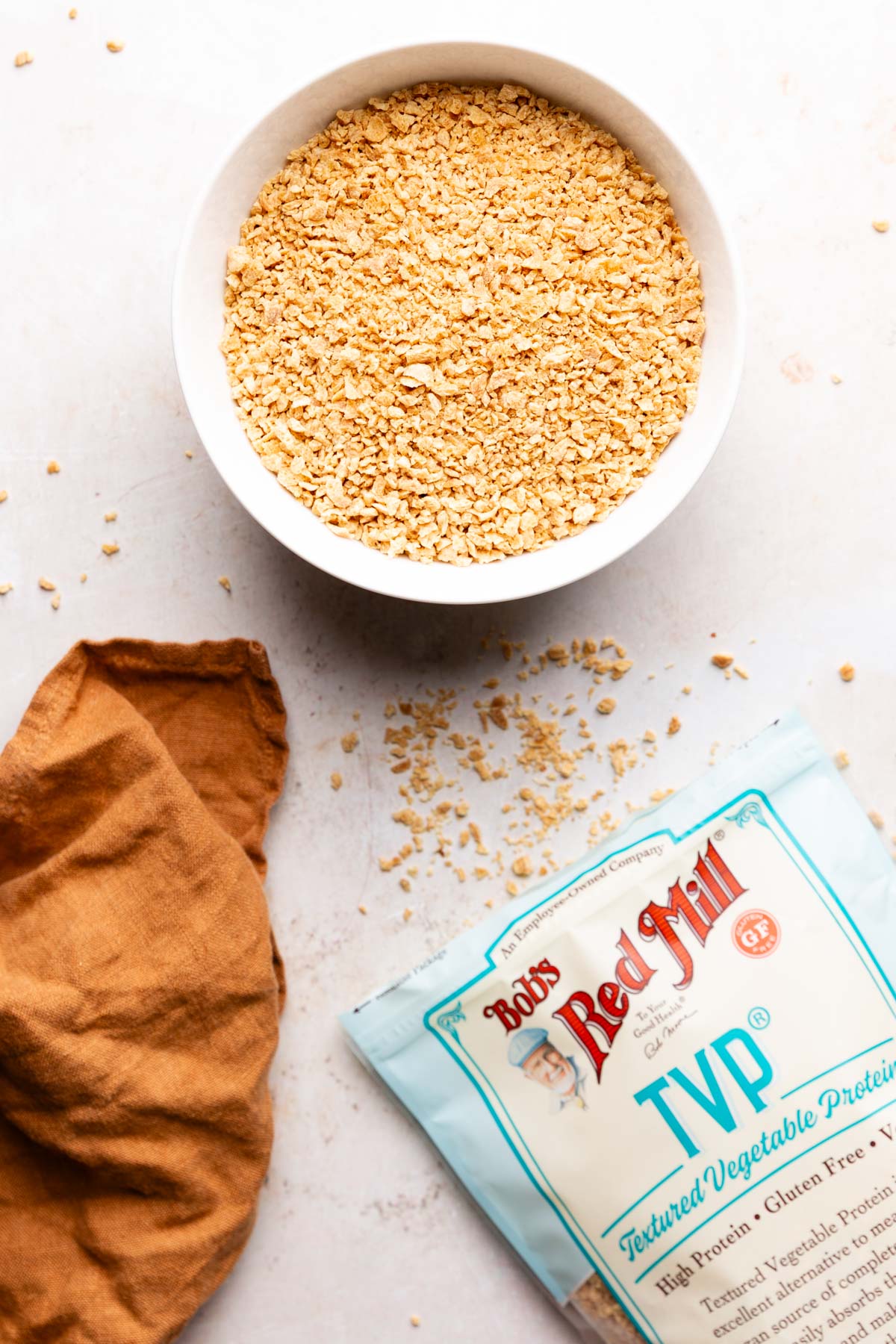
TVP is a dried soy product made from defatted soy flour—basically, what’s left after soybeans are pressed for oil. The soy flour is heated and pushed through an extruder, which gives it a fibrous, chewy texture once it dries into granules or chunks.
On its own, TVP doesn’t taste like much—but that’s a good thing, because it takes on the flavor of whatever sauce or seasoning you use to cook it.
Because dry TVP is shelf-stable, it’s also a handy pantry staple for nights when you want a protein-rich meal without a trip to the store.
TVP comes in several different cuts and sizes, depending on how you want to use it. The most common shapes are granules, chunks, or strips.
- Granules, mince, or crumbles: Fine, small pieces that mimic ground beef, pork, or turkey. They are great for spaghetti Bolognese, chili, tacos, and sloppy joes. I most often use the granules as a replacement or extender for ground meat.
- Chunks or nuggets: Larger spongy pieces. Best for hearty stews, curries, and rice bowls.
- Strips or curls: Thinner, slightly larger, flatter pieces that resemble larger chunks of shredded meat. These are great for vegetarian pulled “pork,” fajitas, or wraps.
Nutritional benefits of TVP
- Plant-based protein: About half of TVP’s dry weight is protein. Soy is a complete protein, meaning TVP has all the essential amino acids. It’s a high-quality protein source, especially for those who follow a vegetarian or plant-based diet.
- Low in fat, no cholesterol: Because the soy flour is defatted, TVP is very low in fat and has no cholesterol, making it great for lightening up beef-based recipes.
- Fiber and iron: TVP also provides fiber and iron.
How to rehydrate and cook TVP (step-by-step instructions)
Here’s the method I use to get the perfect texture in every TVP recipe, whether I’m using granules, chunks, or strips:
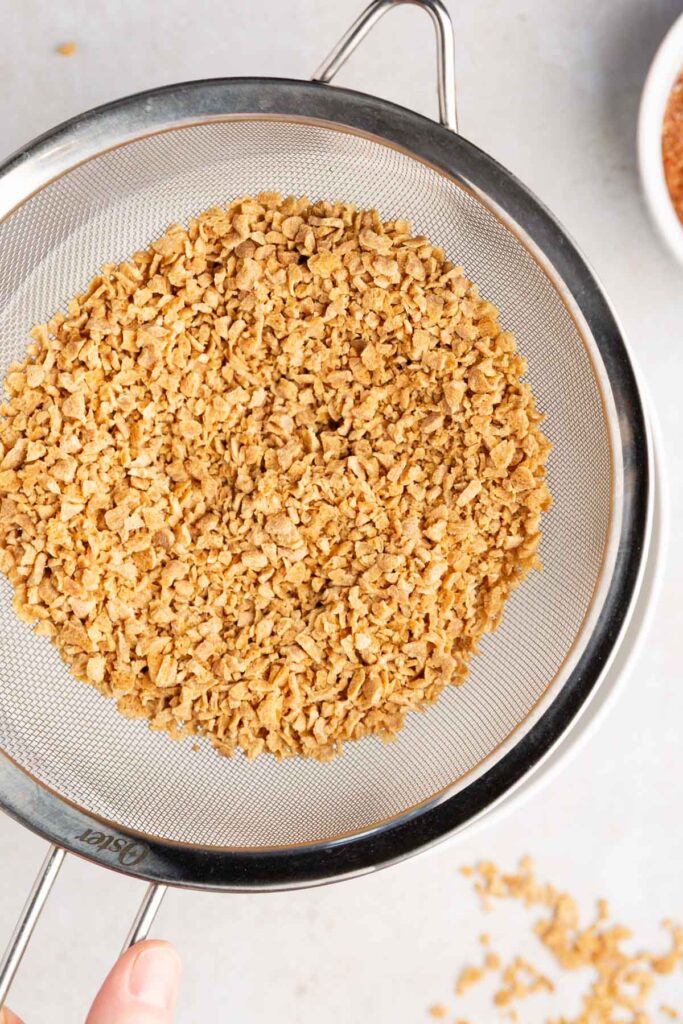
Step 1: Sift lightly through a fine-mesh strainer to remove most of the TVP dust which can make TVP gummy.
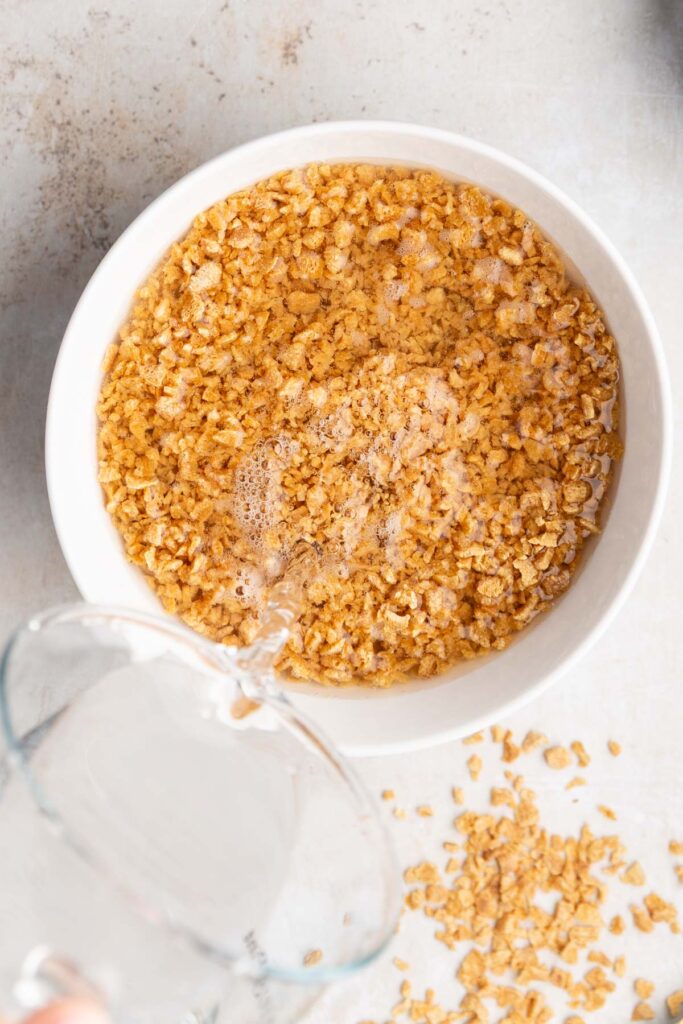
Step 2: Cover with room-temperature water and soak for ~10 minutes while you prep your broth/seasoning mixture.
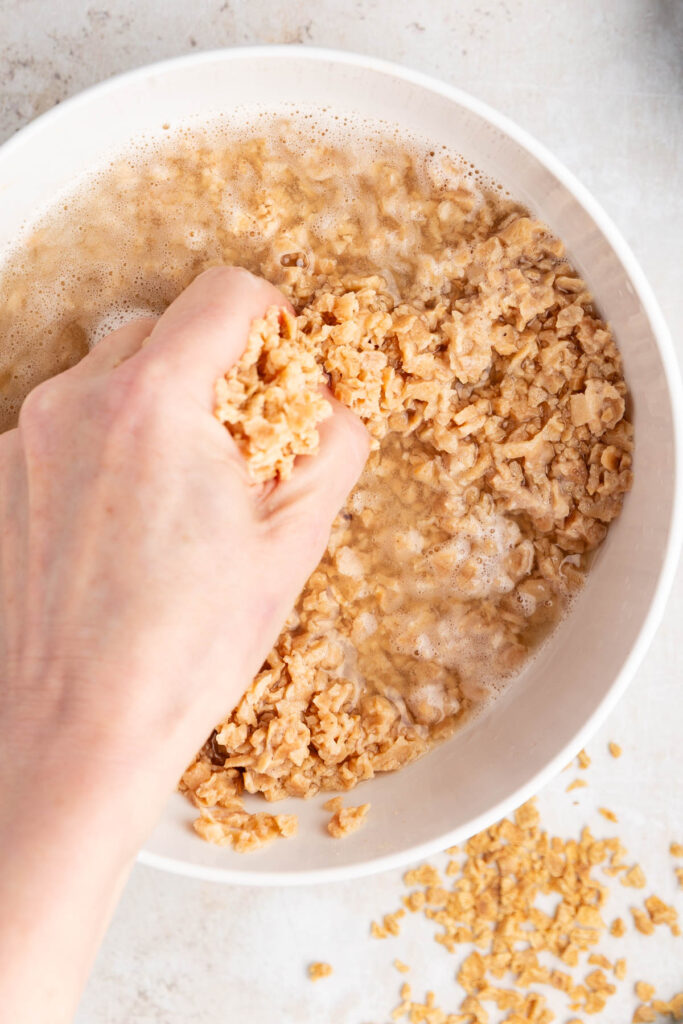
Step 3: Squeeze and release the TVP several times while soaking to help reduce bitterness.
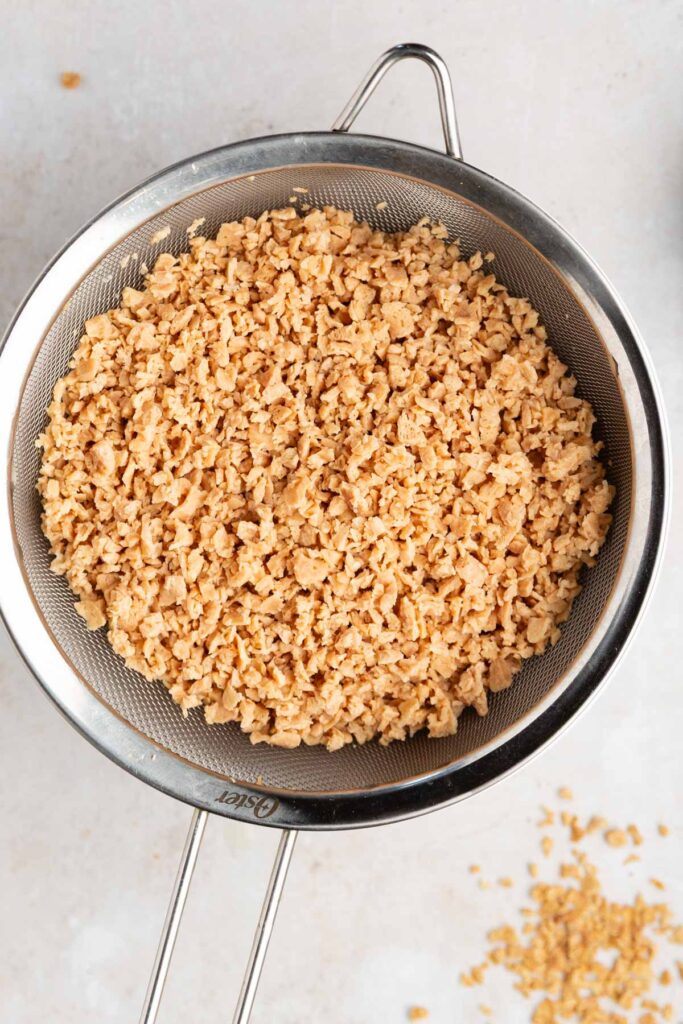
Step 4: Drain and press out as much excess water as you can to help the TVP brown better.
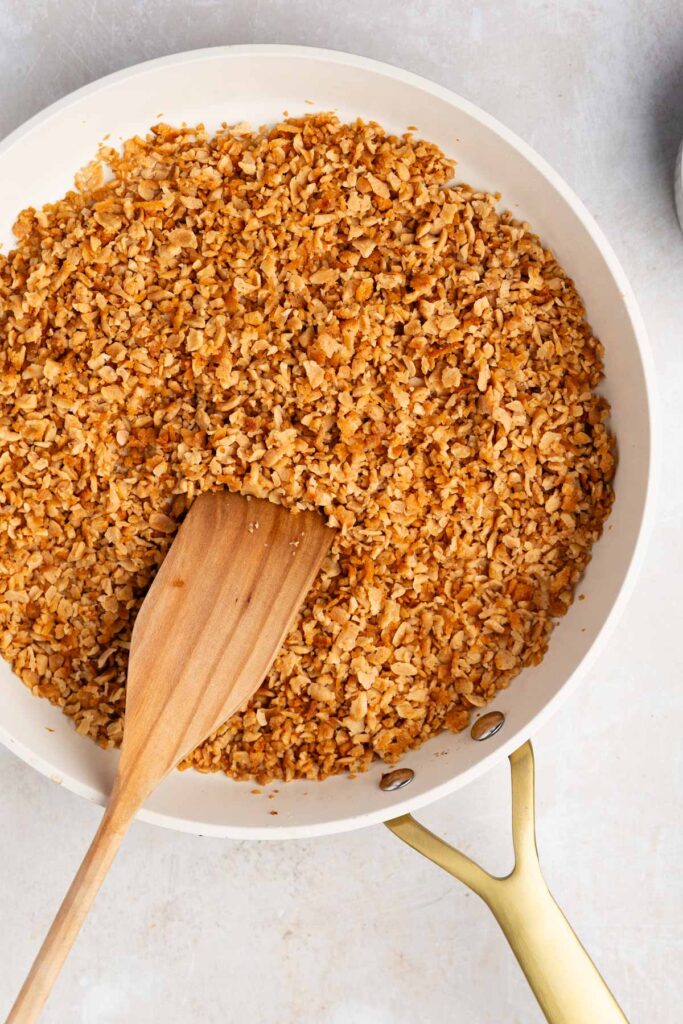
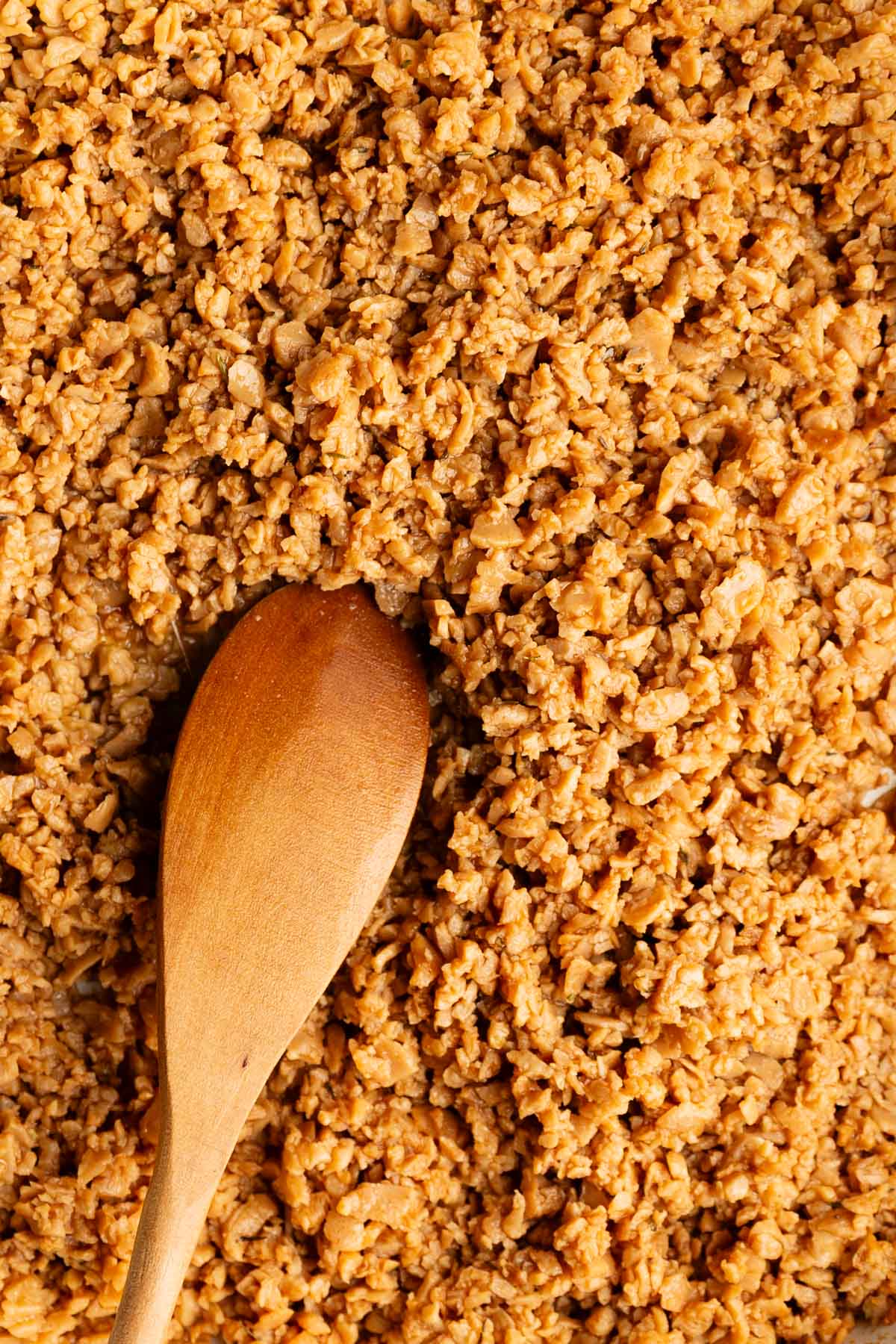
*Step 5: Heat oil over medium-high heat, add the rehydrated TVP and stir to coat. Then stir only once every 2 minutes so it browns on the bottom, about 12 to 15 minutes (longer for big batches).
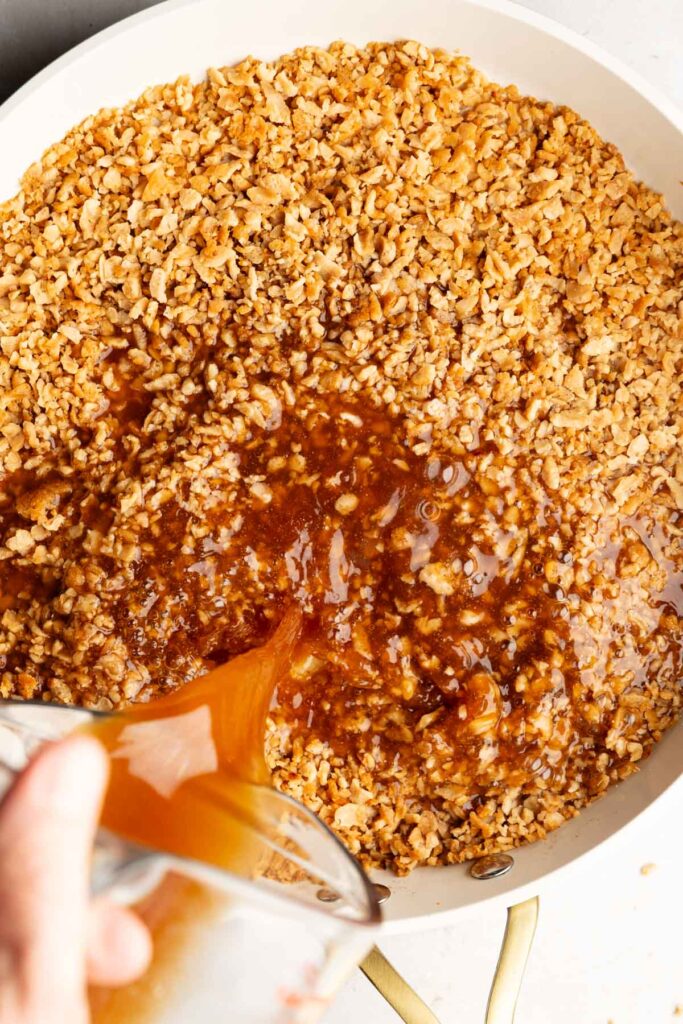
Step 6: When mostly golden, add the broth/seasoning mixture (about ⅔- 1 cup liquid for every 1 cup of dry TVP you started with) and cook until absorbed.
*If you’re mixing TVP into ground meat, stop after step 4 and see How to use TVP as a meat extender below.
Tips for the best TVP
- Use a high-heat oil: Extra virgin olive oil can start to smoke over medium-high heat, so use a neutral oil with a high smoke point, like avocado or canola oil.
- Watch the heat: If the TVP starts to burn while browning, turn the heat down to medium.
- Add liquid as needed: If the TVP looks too dry, add more broth or liquid 2 to 3 tablespoons at a time until it’s as saucy as you like.
- Taste before serving: Broths and seasoning blends vary in saltiness, so taste and adjust at the end.
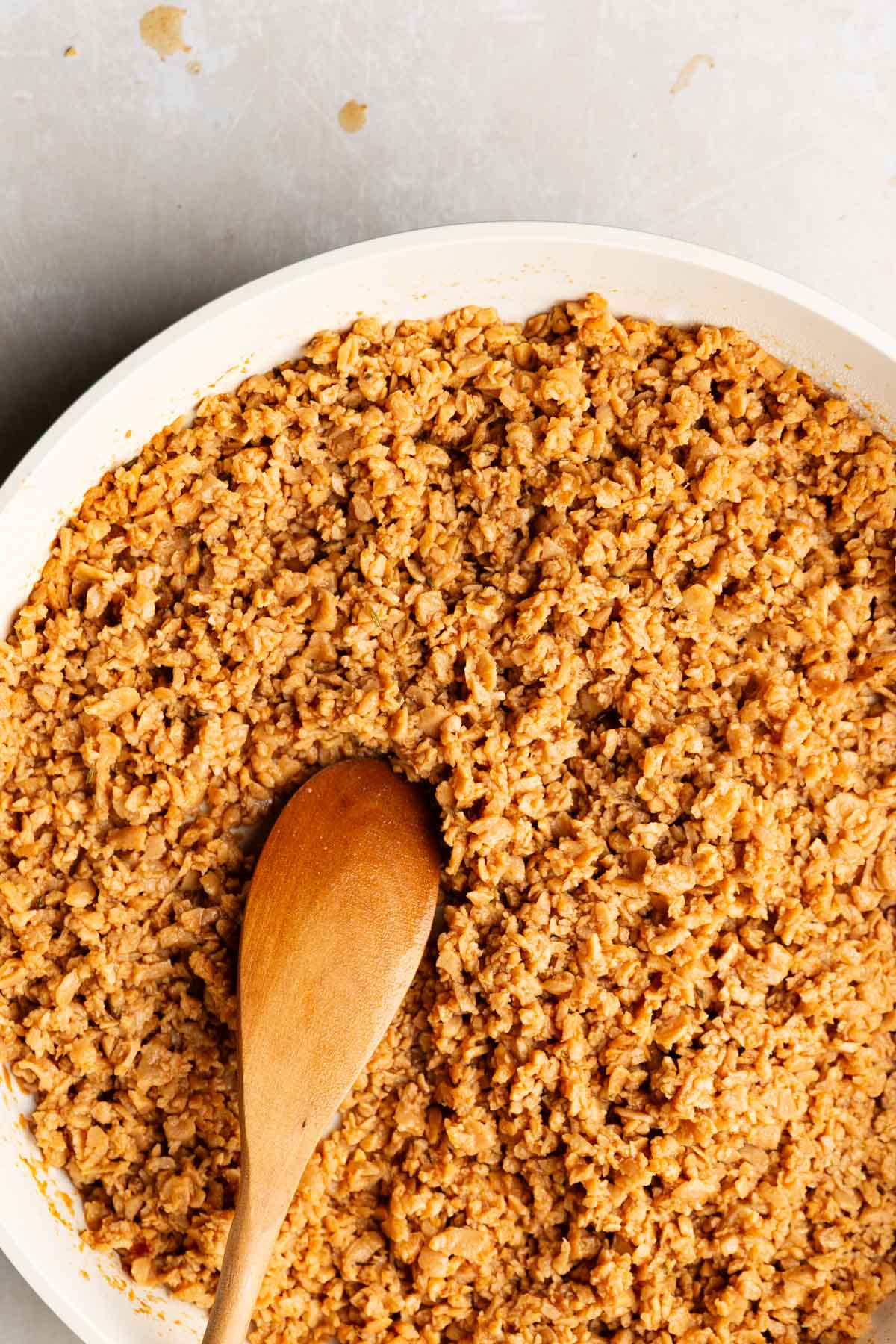
How to use TVP
You can use textured vegetable protein as a meat extender by mixing it into ground meat, or as a meat substitute.
Use TVP as a meat extender
Stretch your ground meat further by mixing in some textured vegetable protein!
How much to use:
- To replace part of the meat: Use ¾ to 1 cup of dry TVP for every half pound of ground meat you want to swap out.
- To double a recipe: Use 1½ to 2 cups of dry TVP to double the cooked volume of 1 pound of ground meat.
How to cook it:
- Rehydrate: Follow steps 1 to 4 in How to rehydrate and cook TVP.
- Skillet dishes like tacos or chili: Brown the ground meat, then move it to a plate and leave the fat in the pan for flavor. Add the TVP and let it brown in the drippings (see step 5). If there’s some fat left, you won’t need oil. If the meat was lean, add a little. Add your seasoning (see step 6), then stir the ground meat back in for the last couple of minutes.
- Burgers, meatballs, and meatloaf: Skip the browning and mix the squeezed TVP straight into the raw meat.
Since you’re adding volume, increase the seasoning slightly to keep the flavor where you want it.
Use TVP as a meat substitute
TVP works best as a meat substitute in saucy, well-seasoned dishes like chili, tacos, and pasta sauce, where it soaks up the surrounding flavors.
How much to use:
- A good ratio is 1½ to 2 cups of dry TVP (about 5 to 6½ ounces) for every pound of ground meat you’re replacing.
How to cook it:
- Prep: Follow all six steps in How to rehydrate and cook TVP. If your recipe is already well seasoned, you can brown the TVP and add it plain. Otherwise, season it first with one of the flavor variations below.
- In your recipe: Add the TVP when the recipe calls for browned ground meat. For example, stir it into chili or pasta sauce, or layer it into a casserole, or use it in place of the lentils in this healthy spaghetti bolognese with lentils or healthy beef and lentil cottage pie.
For an all-TVP burger or meatball, you’ll need a binder, like flax meal and oats, to help it hold together—so it’s best to follow a recipe for these.

Easy ways to use TVP
TVP tacos and burritos
Tacos and burritos are the easiest place to start. My TVP taco meat comes together in about 30 minutes and is packed with flavor. We use it for tacos, burritos, burrito bowls, or nachos at least once every couple of weeks!
TVP in soups, stews, and chili
TVP works well in soups and stews because it soaks up flavor from the broth. Think of it as a stand-in for ground beef in big pots of chili or tomato-based soup.
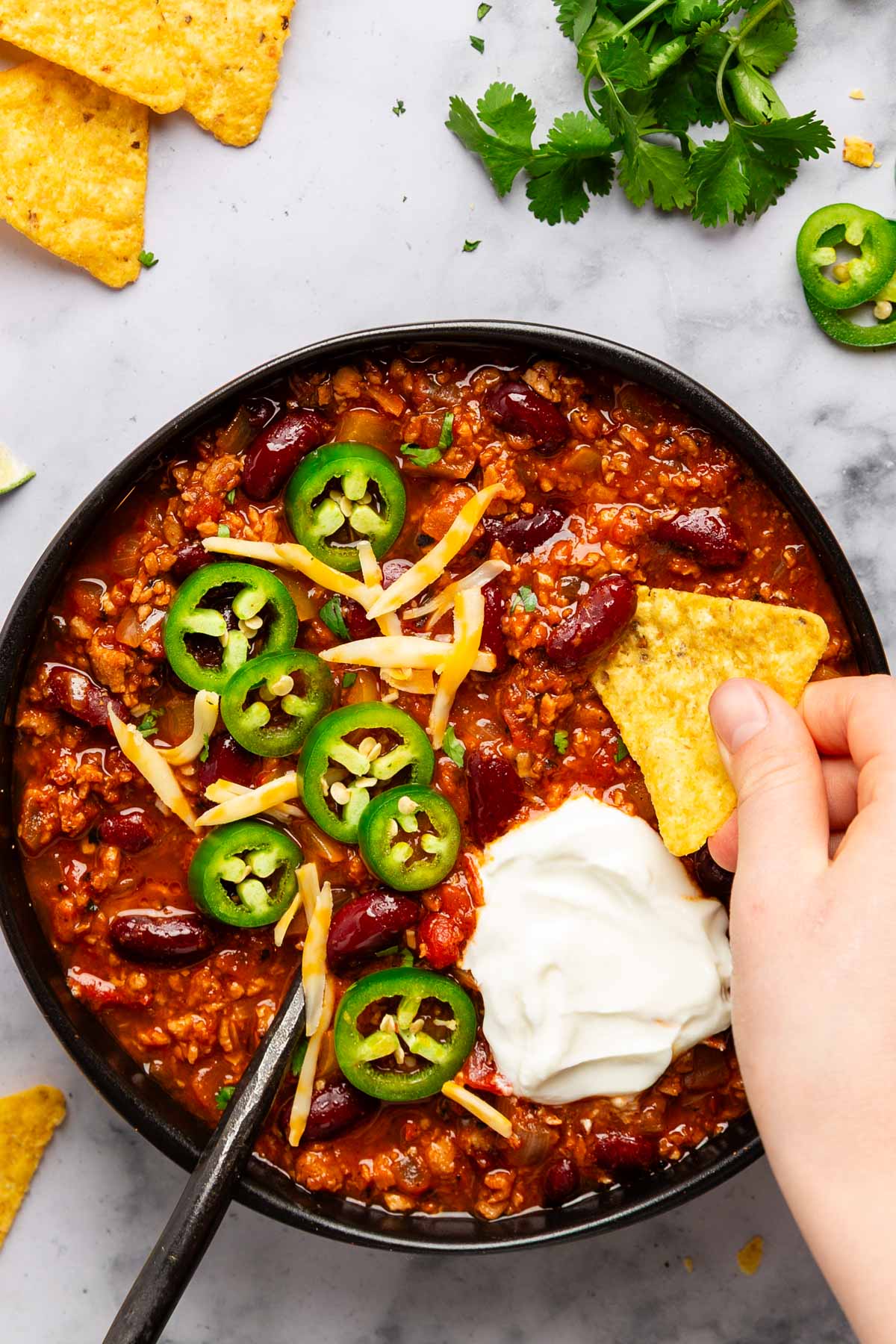
My vegetarian chili with TVP is thick, hearty, and packed with flavor and plant-based protein. It’s another great first dish if you’re new to TVP. In your own soups and stews, season a little more boldly than usual, since TVP absorbs flavor.
TVP casseroles
Casseroles are an easy way to use TVP, since it mixes into a saucy filling. Use it in place of all or part of the ground meat in dishes like baked ziti or shepherd’s pie. Brown and season the TVP granules using one of the flavor variations below, then add it to the dish as you would with ground meat, and bake.
TVP burgers, meatballs, and meatloaf
Mix rehydrated TVP granules into your favorite bean burger mixture or ground meat for plant-boosted burgers, meatballs, or meatloaf. Make sure to squeeze it very dry, as extra water may cause patties and meatballs to fall apart.
TVP doesn’t hold together on its own, so meatless TVP burgers, meatballs, and meatloaf are best made from a tested recipe that uses a binder like egg, oats, or flax meal.
Easy TVP recipes for beginners
If you’re new to TVP, start with one of these easy TVP recipes (all PFF favorites):
- TVP taco meat: Great for quick tacos, salads, or nacho night
- Hearty vegetarian chili with TVP: A thick, kid-friendly chili that freezes well.
- Vegan ground meat: Use it anywhere a recipe calls for browned ground beef.
Once you’re comfortable cooking with TVP, try some of the flavor variations below in some of your other favorite recipes.
TVP flavor variations
The beauty of TVP is that it takes on whatever you season it with.
Each combination below uses 1½ cups dry TVP, soaked, squeezed, and browned (see steps 1 to 5 above), then seasoned as follows. Mix your sauces, tomato paste, and spices into the broth so those flavors absorb evenly.
Mexican / Taco TVP
Here’s what I use to flavor my favorite TVP taco meat:
- 1 to 1½ cups broth
- 2 tablespoons tomato paste
- 3 tablespoons homemade taco seasoning
- 2 cloves garlic, minced or pressed
Italian / Bolognese TVP
- 1 to 1½ cups broth
- 2 tablespoons tomato paste
- 1 to 2 tablespoons Italian seasoning
- 2 cloves garlic, minced or pressed
- ¼ teaspoon red pepper flakes (optional)
No Italian seasoning blend? Use: 1 to 2 teaspoons dried oregano, 1 to 2 teaspoons dried basil, ½ to 1 teaspoon dried rosemary, ½ to 1 teaspoon dried thyme.
Asian-inspired
- 1 to 1½ cups broth
- 2 tablespoons hoisin sauce
- ½ teaspoon garlic powder
- ¼ teaspoon ground ginger
- 1 tablespoon brown sugar
- 1 tablespoon rice vinegar
- 2 teaspoons sesame seeds (optional garnish, add at serving)
No hoisin sauce? Use an equivalent amount of soy sauce and increase the brown sugar to 2 tablespoons; add more to taste if desired.
BBQ TVP
- 1 to 1½ cups broth
- ¼ cup BBQ sauce
- 1 teaspoon smoked paprika
- ½ teaspoon onion powder
- ½ teaspoon garlic powder
Savory sausage-style TVP with herbs
- 1 to 1½ cups broth
- 1 tablespoon tomato paste
- 2 cloves garlic, minced or pressed
- ½ teaspoon dried sage
- ½ teaspoon dried thyme
- ½ teaspoon dried oregano
- ½ teaspoon onion powder
- ½ to 1 teaspoon kosher salt (start with ½ teaspoon, taste and adjust; if using fine salt, reduce the amount by ¼ to ½ teaspoon)
- ¼ teaspoon fennel seed (optional)
- Pinch of red pepper flakes (optional)
Classic beef-style TVP
- 1 to 1½ cups broth (ideally, beef- or no-beef-flavored)
- 1 tablespoon tomato paste
- ½ teaspoon garlic powder
- ½ teaspoon onion powder
Tips for storing TVP
Storing dry TVP
Store it in a cool, dry place. Ours lives in the pantry. Check the date on the package to see how long it will stay at its best.
Storing rehydrated or cooked TVP
Store in an airtight container in the refrigerator for up to 5 days. You can also freeze rehydrated TVP for up to three months. Transfer cooled TVP to a freezer bag and lay flat to freeze. Thaw overnight in the fridge before using.
Reheating
Warm rehydrated/cooked TVP in a skillet over medium heat with a splash of broth or water until heated through.
Frequently asked questions about TVP
How much water do you need to rehydrate 1 cup of TVP?
You don’t need to measure. Cover the TVP completely with room-temperature water and let it soak. After browning rehydrated TVP, add about ⅔ to 1 cup of broth (mixed with your seasonings) for every 1 cup of dry TVP, and cook until it’s absorbed.
How long does it take for TVP to rehydrate?
About 10 minutes in room-temperature water. That’s enough time to prep the rest of your ingredients while it soaks.
What is the best way to rehydrate TVP?
Sift the dry TVP through a fine-mesh strainer to remove the dust, then cover it with room-temperature water and soak for 10 minutes. While it soaks, squeeze and release it a few times to help reduce bitterness. Drain the TVP and press out as much water as you can, so it browns well and soaks up your seasoning instead of turning mushy.
Can I soak TVP in broth instead of water?
Yes, you can soak TVP in broth instead of water, but some will be discarded when you drain and press the TVP. I prefer to soak it in room-temperature water first, then add seasoned broth to the pan after browning.
Do I have to cook TVP after rehydrating it?
Rehydrating softens it, but TVP tastes best browned and seasoned or cooked into something with additional flavor, like a burger or meatball.
How much TVP equals 1 pound of meat?
About 1½ to 2 cups of dry TVP (about 5 to 6½ ounces) replaces 1 pound of ground meat.
Why is my TVP bland?
TVP has very little flavor on its own, so you’ll need to season it well using a combination of ingredients like broth, sauces, tomato paste, spices, or salt. Whisk your flavorings into the broth so they’re evenly distributed, and add them after browning.
Why is my TVP mushy?
Usually it’s holding too much moisture. Press out as much water as you can after soaking, then brown it in a hot skillet, stirring once every couple of minutes.
Where can I buy TVP?
Look in the baking aisle, the natural foods section, or the bulk bins at your local supermarket. You’ll also find it at health food stores and online.
Is TVP gluten-free?
TVP is made from soy, which is naturally gluten-free, but check the package if you need certified gluten-free.
Is TVP healthy?
TVP is a good source of plant-based protein that is low in fat and cholesterol-free. Plain TVP has no added seasoning, so you control the salt.